
What academic qualification do I need in order to
be eligible to apply at a German university?
The main admission requirement to enter German general
or technical universities (Universitäten / Technische Hochschulen) is a school leaving certificate
equivalent of the German school leaving certificate
'Abitur'. The Singaporean GCE-‘A’-Levels
and the IB fulfill this requirement. With these certificate you can apply directly to university.
The Polytechnic Diploma,
on the other hand, is unfortunately not considered
equivalent, as it is not as broad-based. Thus, Polytechnic Diploma
holders from Singapore can apply to the so-called
Fachhochschulen (FH) (also known as Universities
of Applied Sciences) only, which have a more
practical, hands-on, application-focused approach
than the general or technical universities. However,
they will first need to pass a so-called assessment
test (Feststellungsprüfung), set individually
by the universities, before they can be admitted. This test can be taken after completion of a one-year foundation course in Germany.
For more detailed information, please refer to ‘ Types
of Universities’ and ‘ Admission
Requirements’ in the ‘ Study’
section.
I have just completed my GCE ‘O’-Levels.
Do I qualify for admission to a German university?
No. You will first need to obtain a polytechnic
diploma resp. sit for the GCE ‘A’-Levels
or the International Baccalaureate, before you can apply
for admission to a German university. There are no bridging
or foundation courses for GCE-‘O’-Levels
holders.
Is a German ‘Diplom’ the same as a polytechnic
diploma?
No, it is not! In the traditional German
degree system, there is no division into undergraduate
and graduate studies: basically, all students
pursue a direct Master degree - there is no
Bachelor equivalent!
That is why German graduates used to be a little older than their European or overseas
counterparts – they usually studied for at least
five to six years. However, this German Master equivalent
does not go by the name of 'Master': for the majority
of degree courses, it is called 'Diplom'. This is often
confusing for Singaporeans, as they automatically assume
the German Diplom to be nothing more than a Polytechnic
Diploma and thus not even a degree! No, a Diplom
is a Master's equivalent! (In the humanities,
the German Master's equivalent is called a Magister,
by the way, and in subjects such as medicine, dentistry,
pharmacy, law and teaching it is called Staatsexamen).
These traditional German degree courses - that used to constitute the majority of all university courses
- are taught in German exclusively.
To qualify for admission, students will need to pass
the so-called DSH German language proficiency exam that
requires roughly 1000 hours of German, which translates
into 10 to 12 months of intensive German classes, if
studied from scratch.
The Diplom degree courses have now been largely replaced with the Anglo-Saxon degree structure of Bachelor and Master in most disciplines and most German universities.
What is meant by ‘international degree courses’?
In the course of internationalizing the German higher
education system, recent years have seen the introduction
of International Degree Programmes (Bachelor,
Master, PhD courses) that use English as the medium
of instruction. Please note that there is no difference in terms of accademic rigour or quality between German taught or English taught degree programmes!
For international degree programmes, knowledge of German is not
usually an admission requirement, but of course
a basic working knowledge of the language will help
prospective students 'survive' in the German-speaking
off-campus environment. However, sound knowledge of
English is indispensable, and thus a TOEFL test
result (or a similar proof of English language
proficiency) needs to be submitted together with the
application form. Singaporean students are often
exempted from this requirement.
Some international degree courses use both English and
German as medium of instruction; if this is the case,
the level of German required is usually less demanding
than for the German-only courses.
A comprehensive list of international degree programmes
can be found under www.daad.de/idp,
while www.study-in-germany.de
also lists traditional German degree courses.
Do German universities offer summer courses?
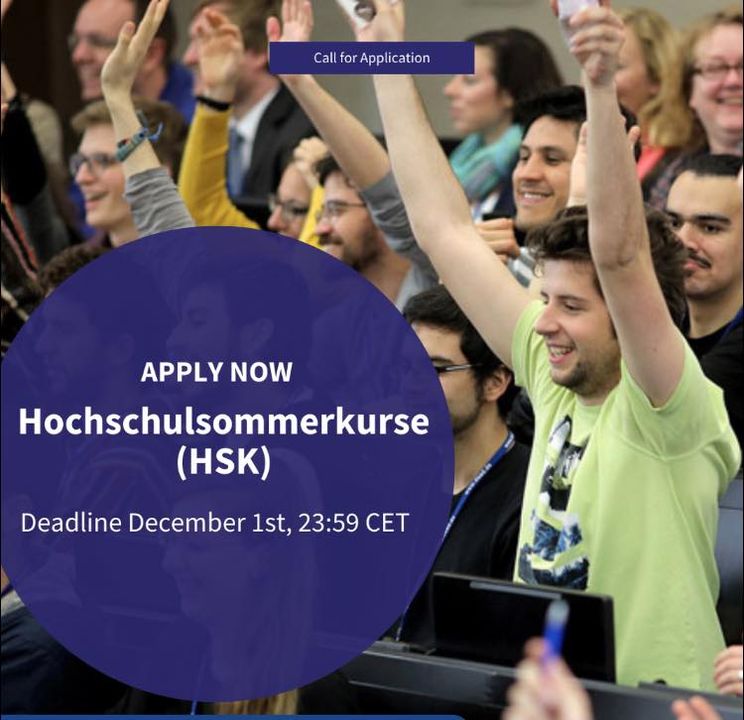
Yes, many of Germany's universities offer summer
courses lasting up to several weeks, which not only
teach you German but also give you a real insight into
Germany in all its diversity. Often you have a choice
between German and English as the language of instruction.
A web-based database makes it easier to find the right
course: http://www.summerschools-in-germany.de
How do I go about applying to a German university?
Please refer to the detailed information on ‘Application’
in the ‘Study’
section.
I am intending to pursue a Master degree at a German
university. Am I eligible to apply for a DAAD scholarship?
As tuition fees are very moderate at public universities,
scholarships are rare and hard to come
by.
To find out on your individual funding options, please consult the scholarship database on www.funding-guide.de
The DAAD runs several scholarship programmes
for Singaporean nationals for doctoral candidates, post-docs and university academics.
For more information on DAAD scholarships, please
click here.
Is my German degree going to be recognized in Singapore?
There is unfortunately no such thing as global recognition
of degrees. Each country has its own regulation of recognizing
overseas degrees. In Singapore, there is no
central authority that accredits foreign degrees, instead
it is left up to the employer to hire the person or
not. However, there are a number of
professional boards (eg. Professional Engineers'
Board, Board of Architects, Singapore Medical Council)
that each have a list of overseas universities, whose
degrees they have accredited and recognize as equivalent
to the Singapore ones. Please check with them, if in
doubt.
Which is the best German university?
There is no one best university
and neither are there any official ranking lists of
German universities (i.e. conducted by the government
or Ministries of Education) The differences in terms
of quality between German universities are much less
pronounced than in other countries. Differences result
mainly from specialization, research collaborations
and contacts etc., which are less linked to a university
as such but rather to individual faculties. Thus, within
one university, some faculties may have top international
standing, while others are less prominent. The quality
of courses is controlled by independent academic bodies,
and the requirements for obtaining a degree such as
a Diplom are clearly defined and implemented by law.
Consequently, any German employer knows the overall
qualification and professional profile of a would-be
employee holding a Diplom degree.
However, several German news magazines regularly conduct
surveys among students, professors and/or employers.
The best-known ranking amongst students and professors
(conducted by STERN magazine in conjunction with Centrum
für Hochschulentwicklung in Kassel) is published
online, under http://www.university-ranking.de.
The quality of all courses is evaluated and controlled
by an independent academic body, the Rektorenkonferenz
and some other associations. These assure that any university
offering a course has the resources to conduct it in
a qualified way. Furthermore, the standards, especially
of Bachelor, Master, as well as Diplom, Magister Artium and Staatsexamen, are
clearly defined in the laws of the universities. These
are not minimal standards! Accordingly,
one should not select the university based on the name
or expected reputation, but based on the own interests.
The university is the best that offers those subjects
and courses one is particularly interested in! Some
less known universities offer courses of highest quality
on specific subjects, which can hardly be found.
Where can I learn German in Singapore?
The classic place to pick up the German language
is the Goethe-Institut (http://www.goethe.de/singapur),
which offers weekly classes in German as a Foreign Language
on all levels, from beginners to advanced. However,
since the pace of the standard courses in Singapore
is relatively slow (~ 200 hours per year), prospective
students who aim to quickly become proficient in German,
are advised to take up intensive courses in Germany
instead, either at one of the 16 Goethe-Institutes or
at a commercial language school.
German is also taught at a number of other educational
institutions in Singapore, including MOELC, National
Junior College, Nanyang Polytechnic, Ngee Ann Polytechnic,
Singapore Polytechnic, NUS and NTU.
I am a student at NUS / NTU / SMU. Can I go to Germany
on a student exchange programme?
Certainly! All three local universities have
established student exchange programmes with German
partner universities. Please contact the International
Relations Office (IRO) of your respective university
to find out more about the exchange programmes and eligibility
criteria.
Can I pursue a degree awarded by a German university
here in Singapore?
Yes, you can. The German Institute of Science and Technology
is a subsidiary of Technical University of Munich (TUM) and the first private German university overseas.
GIST-TUM Asia is offering joint Master programmes with both NUS
and NTU. Since 2010, GIST-TUM Asia now also offers Bachelor programmes in cooperation with SIT. Find out more under http://www.gist.edu.sg.
I am a Singapore citizen intending to study in Germany.
Do I need a visa?
Yes, you do. Only citizens of EU countries
and of Australia, Canada, Honduras, Iceland, Israel,
Japan, Liechtenstein, Monaco, New Zealand, Norway,
San Marino, Switzerland and the USA do not need a
visa to study at a German university. You are urgently
warned against entering the country as a tourist;
a tourist visa cannot be converted
into a visa for study purposes after your arrival
in Germany.
The German Embassy Singapore issues three types of
educational visas:
-
a language course visa,
which is valid only for the duration of the course
and cannot be subsequently converted into a student
visa
-
a student applicant visa,
if you do not yet have a certificate of admission
to higher education or confirmation of application;
on receipt of the admission letter, it can be converted
into a residence permit for student purposes at
the aliens’ registration office (‘Ausländerbehörde’).
-
a student visa
(‘visa for study purposes’) valid for
one year (renewable in Germany)
If you intend to commence your studies in Germany
immediately after your language course, you need to
apply for either a student visa or a student applicant
visa before your arrival in Germany, otherwise you
will have to leave the country at the end of the course
and reapply from Singapore. The visa for a language
course cannot be converted into a student visa or
a student applicant visa in Germany!
In order to apply for a student visa, you must submit
a valid passport and a number of passport photos,
a completed application form for a residence permit,
a letter of admission from a German university (‘Zulassungsbescheid’),
authenticated copies of your educational certificates
as well as proof of sufficient funding (a bank statement
or similar), in order to show that you (or your parents,
sponsor etc.) have enough financial resources to cover
the living expenses incurred during your stay in Germany
(minimum EUR 600 per month, i.e. EUR 7200 per year).
Please submit the supporting documents in duplicate.
Processing time for a student visa is about
six to eight weeks.
For detailed information about the different types
of visa and the application process in general, please
refer to http://www.sing.diplo.de/en/01/Visabestimmungen/Visabestimmungen.html
or contact the German Embassy’s consular section
directly. The staff there will be pleased to assist
you in all questions regarding the visa application
process.
I have received an admission letter from a German university.
What do I have to do next?
Apply for a student visa at the German Embassy
as soon as possible. Processing time can take up to
eight weeks. For more information about the visa application
process, please refer to http://www.sing.diplo.de/en/01/Visabestimmungen/Visabestimmungen.html

Where is the German Embassy located?
The German Embassy has moved in September 2004
and is now conveniently located near the Raffles Place
MRT station.
50 Raffles Place
#12-00 Singapore Land Tower
Singapore 048623
Tel.: (65) 6533 6002
Fax: (65) 6544 1132
Email: germany@singnet.com.sg
Opening hours of the visa section: Monday to Friday:
9 am – 12 noon
Am I allowed to work part-time while in Germany?
Yes, you will be allowed to work part-time. However,
if you are not a citizen of an EU country, or of Iceland,
Liechtenstein, Norway or Switzerland, you will only
be able to work for up to a maximum of 90 days or 180
half days (up to four hours each) per year without a
work permit. Please remember, though, that it is not
easy to find a job, especially if you speak little or
no German. On-campus academic jobs such as those of
student assistants and tutors (‘studentische /
wissenschaftliche Hilfskräfte’) are exempted
from this limitation on working hours, but such sought-after
jobs tend to be snapped up quickly. If you are a DAAD
scholarship holder and would like to earn some extra
money besides studying, you will first need to get permission
from the DAAD. Detailed information on work permit legislation
can be found on the following website: http://www.daad.de/deutschland/studium/studienplanung/00491.en.html
How do I find a place to live?
You will find private accommodation offered on
the notice boards in your university or college, at
the “Studentenwerk” (student services) or
at the “Akademisches Auslandsamt” (international
office). A very promising flat-hunting strategy involves
studying the classifieds in local papers, but you will
obviously need to know a little bit of German for that.
Those who want to get their hands on one of the student hall of residence places (state-subsidized
and thus good value for money!), need to let student
services know of their interest as early as possible.
There are also privately-run hostels.
If you want to start hunting for a flat from home, you
will generally be able to find a link to student services
(“Studentenwerk”) via the homepage of the
university of your choice. Once on the “Studentenwerk”
website, you can register your interest in a student
hall of residence place. If you would rather live in
private accommodation, you can try an international
flat-sharing agency such as the “Mitwohnzentrale”
(http://www.mitwohnzentrale.de).
Shared flats (“Wohngemeinschaften” or “WGs”
in short) are very popular among students in Germany
(check out http://www.studenten-wg.de,
http://www.studenten-wohnung.de).
What about health insurance?
Under German law, all university students are
required to take out health insurance. Therefore you
will need to submit an insurance certificate (‘Krankenversicherungsnachweis’)
when you enrol at the admissions office. No health insurance
means no registration.
Students who are under 30 years of age, or have not
yet completed their 14th semester, pay a very low premium
for health insurance, because they fall under the rates
usually applicable to lower income groups. The rate
is fixed annually by the Federal Ministry of Health.
Any statutory health insurance company (eg. AOK,
Barmer
Ersatzkasse , Techniker
Krankenkasse etc.) can give you more information
and all the necessary application forms.
Students at colleges of preparatory studies, guest researchers,
anyone taking part in language courses and students
who are older than 30 years of age do not qualify for
public health insurance. Nevertheless, they still have
to supply proof to the Aliens’ Registration Office
that they have adequate health coverage in order to
attain a residence permit. Thus, they will have to take
out private health insurance cover (eg via http://www.ausland24.com).
I would like to get in touch with fellow Singaporeans
studying in Germany. Whom should I contact?
Aiyah, the Singapore Students’ Association
of Germany, lah! ;-)
Check out their website (http://www.ssag.de),
chock-a-block full of useful information on everyday
life, read the first hand experience reports, browse
the forum or get in touch with them via email (exco@ssag.de). You can also join them on Facebook; just look for SSAG.
Any advice regarding the bureaucratic jungle?
You should get the red tape out of the way as
soon as possible. That may be unpleasant, but it's necessary.
Your first stop should be the Residents’ Registration
Office (‘Einwohnermeldeamt’).
Anyone who plans on staying in Germany for more than
three months has to register their permanent address
within one week. You'll need a copy of the rental agreement
or other documented proof of where you're living (eg
a hotel or youth hostel confirmation). If you move,
you have one week to register your new address. Your
university’s International Relations Office can
tell you more.
The Aliens' Registration Office (‘Ausländerbehörde’)
is the next stop for students or guest researchers in
Germany. This is where you apply for a residence
permit (‘Aufenthaltsgenehmigung’).
Brace yourself for long waiting times and overworked
staff… Students have to prove that they can support
themselves financially. This means they will have to
have at least € 500 at their disposal each month.
Proof of health insurance cover is also essential! Residence
permits for students are valid for one year only and
have to be renewed annually.
Next, make your way to a bank or to the Post Bank in
order to open a current account. Don’t forget
to bring along your registration from the Residents’
Registration Office and your residence permit.
Once you have completed all these steps, go to the ‘Studentensekretariat’
to enrol – you will need your passport, residence
permit, letter of admission (‘Zulassungsbescheid’),
a receipt of the administrative fee, the certificate
of health insurance, passport photos and the completed
matriculation form (‘Antrag auf Einschreibung’).
Done? Congratulations! You have survived the bureaucratic
jungle – now let the fun begin!
I have browsed through your FAQ section, but I still
have problems finding the information I need.
Please contact the DAAD Information Center by
phone (6777 7407 ext. 189) or email (daaddirector@tum-create.com.sg).
You are also welcome to make an appointment for a free
personal one-to-one consultation.
|